
For an industry built around creating moments that last beyond the final note, Matt Fraser has an interesting perspective on what happens after the music stops.
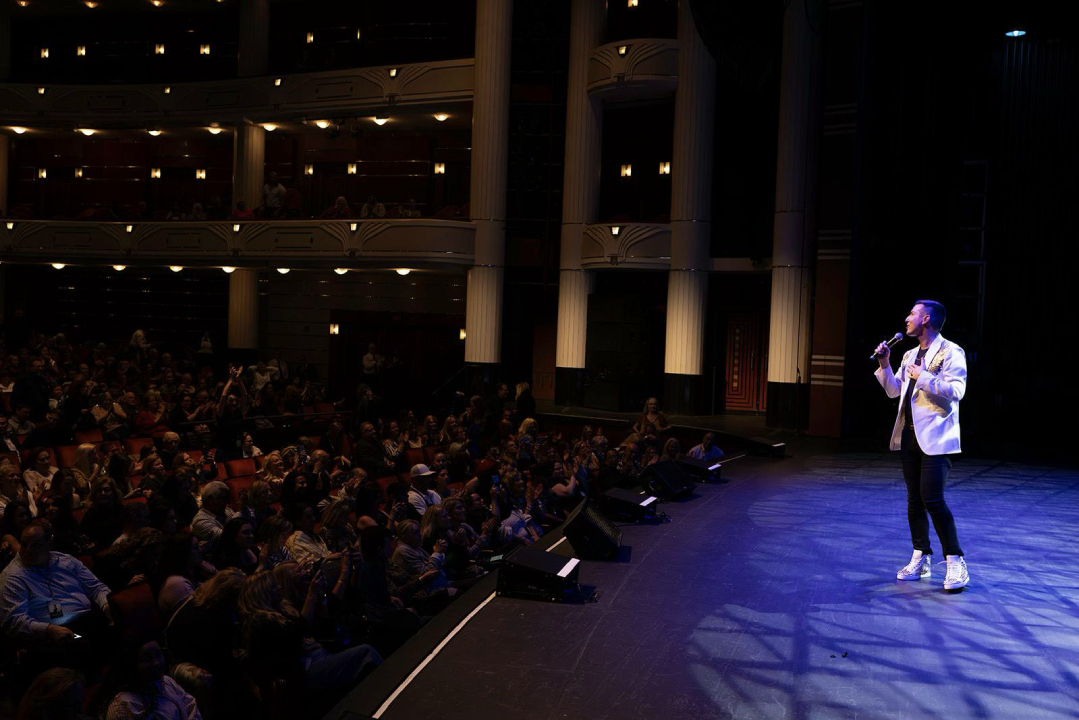
Fraser, America’s top psychic medium, New York Times bestselling author and former star of E!’s Meet the Frasers, has spent years speaking with people about grief, memory and what he believes happens after death. Now touring theaters across the United States while working on his next book, Fraser has also found himself crossing paths with musicians, entertainers and others whose careers revolve around creating emotional connections with audiences.
Among them is Grammy-winning superstar Gloria Estefan.
Fraser visited Estefan’s Miami home to conduct a reading for the singer and her family before later appearing alongside them on Red Table Talk: The Estefans. For Fraser, however, celebrity disappears quickly once a reading begins.
“One of the things I learned very quickly is that Spirit does not care whether someone has a Grammy sitting on their shelf or whether nobody outside their family knows their name,” Fraser says. “When I sit down to do a reading, everybody becomes the same. They are simply someone who misses a person they love.”

He remembers the experience with Estefan less for her accomplishments than for what happened when the attention shifted away from the public figure.
“What struck me was how quickly everything else disappeared once the reading started,” Fraser says. “It wasn’t about fame, music or celebrity. It was about family, love, loss and hearing from the people they missed.”
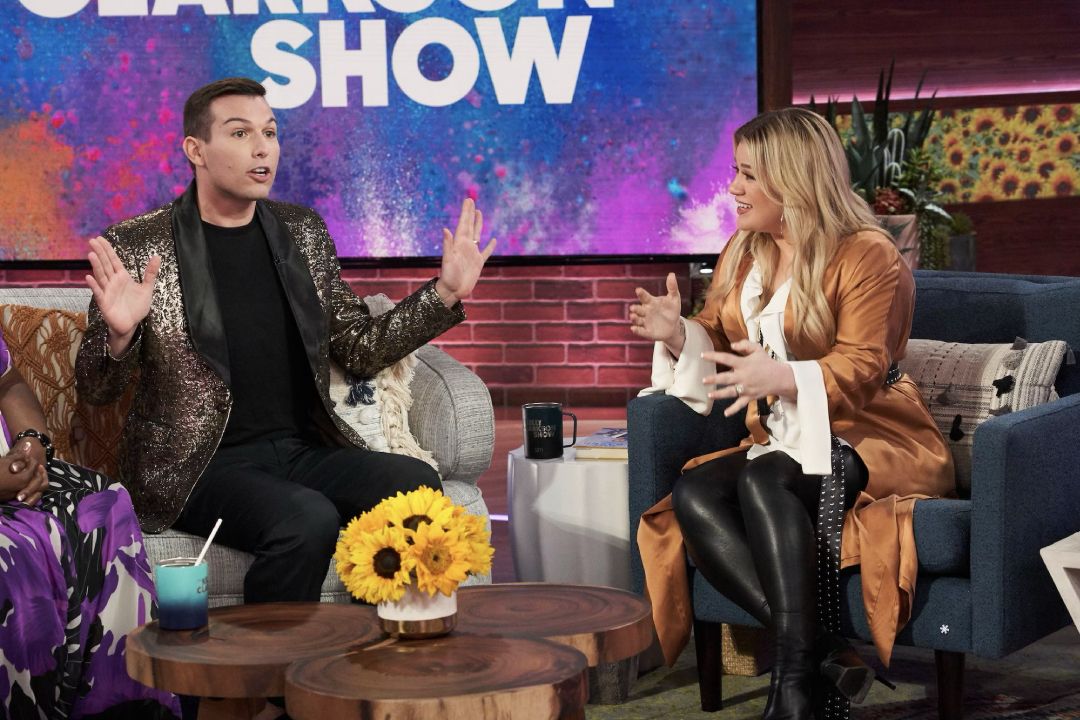
The two have remained in contact, something Fraser calls one of the unexpected benefits of his work. He has also read Donnie Wahlberg and appeared on The Kelly Clarkson Show, giving readings to guests before Clarkson’s audience.
Yet for artists accustomed to asking what comes next—the next album, tour, single or opportunity—Fraser says his readings aren’t designed to provide a supernatural career strategy.
“My job isn’t to tell someone what album to make, what job to take or what their next career move should be,” he says. Instead, Fraser says clients sometimes tell him afterward that resolving something emotionally has helped provide the clarity or confidence needed to move forward.
There is also a deliberate rule behind his celebrity readings: He avoids researching the person beforehand.
“The less I know, the better,” he says. “I want everything I’m receiving to come through Spirit rather than something I might have seen or heard beforehand.”
Perhaps unsurprisingly for someone whose work revolves around memory, Fraser considers music uniquely powerful. A few seconds of a familiar recording can seemingly collapse decades, bringing back a childhood bedroom, an old relationship, a parent or a moment otherwise buried beneath years of life.
“Music has always fascinated me because it is one of the fastest ways to change the energy in a room,” Fraser says. “You can hear three seconds of a song and suddenly you’re ten years old again, you’re thinking about someone you love, or you’re remembering a moment you haven’t thought about in twenty years.”
That relationship between music and memory takes on another dimension in Fraser’s work. He says people frequently tell him that after asking a deceased loved one for a sign, a meaningful song unexpectedly begins playing.
“To me, music is almost like an emotional language,” he says. “It reaches us before our logical mind has a chance to get involved.”
Fraser believes that relationship with music continues after death. In his view, the characteristics that make an artist an artist—the desire to create, communicate and express—aren’t simply extinguished.
“A musician doesn’t suddenly stop loving or creating music because they crossed over,” he says. “A songwriter doesn’t stop being creative. We don’t lose our personality, our humor, our passions or the things that brought us joy.”
It’s a philosophy that became particularly poignant for Fraser following the recent death of Dolly Parton. The country icon’s passing prompted him to write about what he believes happens to an artist’s creativity after death.
“I believe Dolly is still Dolly,” Fraser says. “Her voice, humor, songwriting, generosity, warmth and that unmistakable sparkle didn’t disappear when her physical body died.”
For Fraser, Parton represents something the music business understands particularly well: An artist’s influence can continue long after the artist is gone. Recordings survive their creators. Songs find listeners who weren’t alive when they were recorded. Lyrics written decades earlier suddenly acquire new meaning for someone hearing them for the first time.
Fraser sees that permanence as a metaphor for his understanding of the soul.
“Think about the musicians we’ve lost whose voices we still hear every day,” he says. “Their physical lives ended, but what they created didn’t. A song can still make someone dance, cry, fall in love, remember a parent or get through one of the hardest days of their life decades after it was recorded.”
Music also plays a practical role in Fraser’s own touring production. His live events deal openly with death and grief, but he has little interest in creating the atmosphere of a memorial service. Instead, upbeat music greets audiences and helps establish the energy of the room before Fraser takes the stage.
“I don’t want people walking into a room that feels heavy or sad,” he says. “I want it to feel alive, exciting and uplifting.”
His pre-show playlist changes regularly, but the objective doesn’t: By showtime, Fraser wants an audience energized for what he jokingly describes as a “conference call with Heaven.”
That balance between death and living also anchors Fraser’s bestselling book Don’t Wait Till You’re Dead and continues to influence his work as he develops his next book. After years of readings, he says the message he repeatedly encounters has less to do with predicting the future than appreciating the present.
“Stop waiting. Stop worrying about things that don’t matter. Tell people you love them. Forgive when you can. Take the trip. Follow the dream. Spend time with your family. Live your life now,” Fraser says. “We shouldn’t have to die to learn the greatest lessons about living.”
For musicians and creators, that idea carries particular resonance. The industry measures success in streams, sales, charts, awards and sold-out rooms, but the ultimate reach of a song is considerably harder to quantify. A recording can become part of someone’s wedding, funeral, first love, heartbreak or recovery without its creator ever knowing.
Fraser believes that impact—not the trophy case—is what ultimately matters.
“Death doesn’t erase what we gave to this world,” he says. “The love we shared, the people we helped, the art we created and the memories we made continue moving through other people’s lives.”
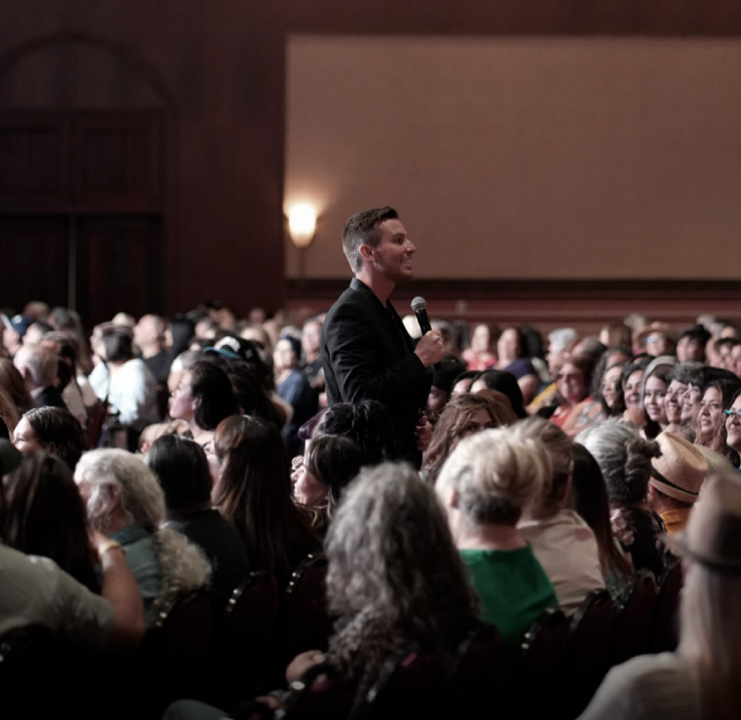
In an industry perpetually searching for the next hit, Fraser’s message to artists is surprisingly simple: Create the work, use the gift and understand that what you put into the world may travel farther than you ever will.
“You don’t have to be a legendary musician to leave something behind,” Fraser says. “Every person leaves an imprint. The question is what kind of imprint you want to leave while you’re still here.”