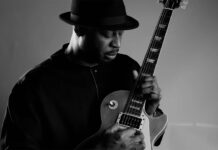
1. Can you introduce yourself to our readers and tell us how your journey in music began?
My name is Kiefer Bahrich! I began playing piano when I was very young. A family friend needed a place to keep his piano, so we kept it in our home. I would sit down as a 4-year-old kid and play on it, slowly learning. I fell in love with the guitar when I heard my father play it, and my love of classic rock led me to ask him to teach me. I learned chords from my father, something that I cherish because it gives me a connection to the classical music of his time. When I was 10 years old, I was given an electric guitar, a beat-up old Stratocaster. I learned how to play it off by listening to songs on the radio! I would play along and slowly learned how to play lead guitar. This unconventional way of starting my musical journey has given me a bonus: learning by listening to the greats of country and rock.

2. At just 18, what first inspired you to start writing and performing your own songs?
I wrote my first song at 16; it was interesting but also unrefined. I wrote it about feelings and emotions. I was born with many health issues, my vocal problems leading to a scratchy yet soft voice that is unique to listeners, and my stunted size and sick teen years leading to a lot of bullying. My real friend throughout this was my guitar. On bad days, I would sit in my room with the lights off and play notes, noodling on the guitar. I still write music to this day in the same way!
3. Growing up in Vancouver, how did your environment shape your musical style?
Growing up on the Pacific coast, I felt a deep connection to the ocean and the sun. Especially on the Pacific coast, there’s a big vibe of peaceful easiness. My style has been shaped by that relaxed feeling. I like to write music. I feel connected to the ocean, songs I would want to sit at the beach and listen to.
4. You’ve described feeling like an outsider — what was that experience like for you personally?
Like earlier, I was born with a few health issues. But that led me to be undersized and picked on really badly throughout my life. Hard situations led me to kind of recluse myself into music. But I became incredibly gifted at all of my instruments because of this, and honed my craft by spending a lot of time alone with just me and my instruments. It also gave me lots of things to write music about!
5. Was there a specific moment where you almost gave up on music?
I almost gave up when I first started social media for my music. Everyone at my high school at the time found out about it, and I was given so much grief over the music. Especially with the entertainment industry, music being part of it, you have to learn to take a lot of things in stride. Trolls and negativity are part of the job. I was lucky in a way to have learned how to take that young.
6. The turning point came during your California road trip — what changed for you during that experience?
The Southern California lifestyle really changed everything for me. The music, the Eagles, Jackson Browne, and Joni Mitchell. But also the vibe and the place. The deserts of California were so peaceful, I just wanted to be there. When I write, I close my eyes and imagine myself in there. The California dream is still alive, and I want my music to show people that it is.
7. Your EP “That’s Alright” feels very personal — what does this project represent in your life?
It represents the beginning. These are the first songs that I’m releasing on streaming services. It’s amazing to me that I’ve come this far on my writing journey. It’s taken a long time and a lot of hardships to get to a place where people want to listen to my music. It brings me so much joy to be able to present these songs to my audience.
8. The title track came to you at 2 a.m. — can you walk us through that moment?
As I said earlier, I like to write my songs in the dark, especially when I’m alone. For me, these moments come in the middle of the night. Usually, I wake up with a song and lyrics in my head, and I have to write them down very quickly before they leave me. This is one of those moments. I was thinking about California, and that road trip specifically, I was thinking about the desert. I had a really bad day. People were picking on me terribly. I lay down, closed my eyes, and went to sleep. I dreamed about California. I dreamed about this place, this mythical idea of somewhere where the grass is greener. The California Dream is a girl from Pasadena holding her hand out, saying it’s OK, here you go, keep on going. I woke up to this song in my head. I had to write it down.
9. Why did you choose “That’s Alright” as the name for the entire EP?
I think I chose the name That’s Alright out of all three songs because it just embodies me as a person. I get up and keep going. That’s all right. Keep moving. It’s the same reason why in the song I chose, a specific drum beat represents the sound of a train track movement. I chose that to symbolize movement. The continuation of getting up and going is like an energy. So the song should be like an energy to keep going.
10. Your sound carries a strong 70s country-rock feel — what draws you to that era?
I feel really drawn to that hair up because of my family. My parents really grew up with that music. My father, in particular, taught me about these songs, and I feel so drawn to them because of this California dream in this era that I still have a lot of. I can see it in the young generation, my age. I can see this idea of wanting something better, wanting more. If you look around the world, you can see so much hardship and struggle. We need more love, and we need more peace. We need more That’s Alright in our world.
11. Artists like The Eagles influenced you — what did you take from their music?
I took the vibe. I also took the idea of songwriting when he wrote a song; it had to be catchy in order to invade something and also get people‘s attention. If you have a song that is good, but it doesn’t have a hook that is catchy, it just won’t grab an audience. I want the songs to grab people in a way that people can sing along, just like the Eagles. That’s the thing they take from their songs. I want to be just like that. I want people to want to sing along to my songs the same way the Eagles did.
12. You played multiple instruments on the EP — which part of the process do you enjoy the most?
I enjoy recording the instruments. I recorded the drums, bass, guitar, and organ, all of the instruments in the song, recorded by me. It was a lot of fun. The drums were particularly hard because they gave me a lot of blisters on my fingers, as we were drumming for hours to get the tracks right, but I did enjoy it. I enjoy the instruments the most. It’s the part that I feel the most connected to.
13. What message do you hope listeners take away from this EP?
I hope listeners take away a feeling of nostalgia and feel a movement. I want more listeners to be able to listen to this and say, Hey, this is pretty good despite it having a retro vibe. I want the newer generation to feel the connection to it and finish by inspiring a whole new generation to start listening to a different kind of music
14. How has releasing your first studio project changed you as an artist?
I changed my mind, in fact, that finally this feels real: the idea that you can make music and you can make a living out of it. It felt like a good dream that a career in music now feels like a reality.
15. Recording your first project in a studio is a major milestone in any musician’s career that typically requires a lot of help along the way — who has supported you to make this moment possible?
My family has supported me every step of the way. It has been an incredible thing for me to have my mother as my rock; she supports me in every way, especially through all the hardships of my life. My father inspired me to start music. He has been an inspiration throughout my whole journey. He also supported me every step of the way through all of my music. Also, my followers, my fans, and everyone online have really been a massive support to me, specifically on TikTok. I had one friend who discovered me through livestreams and paid for me to be able to go to the studio and record my songs. It was an incredible experience.
16. Looking ahead, what’s the next chapter for you?
The next chapter is to keep on making songs, keep on going. I hope to get signed. I plan to keep on dreaming because dreams obviously do come true. That’s what I’ve learned from this whole experience: that if you work hard enough, dreams become a reality.