
In an industry still oriented around singles, short release cycles, and algorithmic volatility, Saska’s career offers a different kind of data set—one built on catalog depth, consistency, and measurable international reach. Operating entirely outside major-label infrastructure, the independent electronic artist and producer has released two full-length albums and one EP between 2024 and 2025, maintaining a steady pace of long-form output that prioritizes continuity over event-based hype. The results of that approach are visible not through momentary virality, but through sustained streaming performance and cross-border audience development.

Saska’s recorded output began to take clearer shape with Dosis in 2024, followed by ElitE EP in 2025 and EmpirE, released on November 7, 2025. Together, these releases form a compact but cohesive catalog, notable less for stylistic reinvention than for its cumulative presence across platforms. Rather than treating releases as isolated campaigns, Saska has built a body of work that functions as a continuously active ecosystem, drawing listeners into earlier material while supporting new releases.
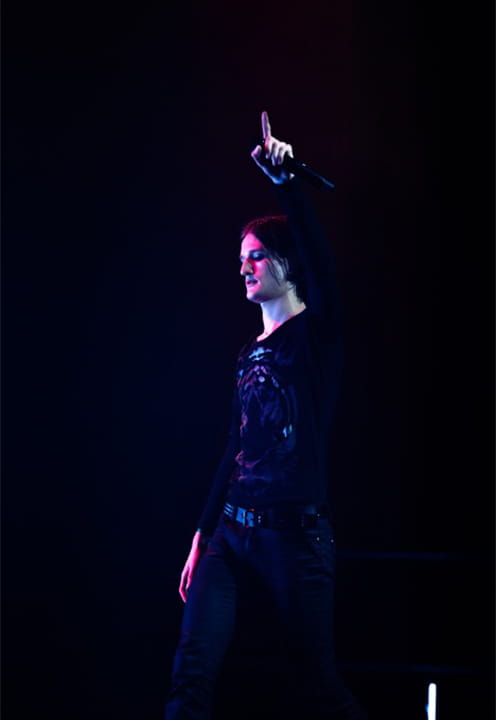
Since its release, EmpirE has generated more than 650,000 streams, contributing to broader catalog activity rather than standing alone as a spike. Over the past 12 months, Saska’s catalog has accumulated more than 5.5 million streams on Spotify and an additional 850,000 streams on Apple Music. These figures point to sustained streaming performance rather than short-lived surges, a metric increasingly relevant as platforms reward long-term engagement and listener retention.
As of early this year (2026), Saska maintains approximately 123,000 monthly listeners on Spotify. More than half of those listeners are based in the United States, making it his largest audience market despite his European base. This imbalance between geography and listenership reflects a broader trend in electronic music, where digital distribution often dissolves traditional regional boundaries. In Saska’s case, the numbers suggest that audience growth has been driven less by localized scenes and more by international discovery, playlists, and word-of-mouth circulation across platforms.
That U.S. listenership is not limited to solo releases. Saska served as the sole featured guest and a credited contributor on American artist Che’s album Sayso Says, taking part in both production and songwriting. The album has surpassed 50 million total streams across platforms and debuted at number six on Spotify’s Top Debut Albums chart. While collaborative credits are often treated as secondary milestones, this cross-border collaboration represents a commercially successful contribution to a high-performing U.S. release, positioning Saska not just as a standalone artist but as a functional collaborator within larger international projects.
The significance of that collaboration lies less in exposure alone than in its context. Saska’s role was not peripheral; he was the only featured guest on the album, contributing materially to its sound and structure. In an era when features are often stacked for algorithmic reach, the focused nature of the collaboration points to trust in his production and songwriting capabilities. It also underscores how independent artists can integrate into commercially viable projects without compromising their operating model.

Live performance has followed a similarly measured trajectory. In December 2025, Saska was selected as a supporting artist on a sold-out, multi-city European tour with Frost Children. Across nine confirmed dates, the tour moved through established live venues including XOYO in London, Le Trabendo in Paris, Paradiso in Amsterdam, Kantine am Berghain in Berlin, and Botanique in Brussels. These are rooms with defined audiences and professional production standards, offering a different kind of validation than festival slots or showcase events.
For an independent electronic artist, participation in a sold-out European tour at this scale signals more than visibility. It suggests readiness for professional touring conditions and an ability to translate recorded work into a live context that resonates with diverse audiences. Supporting slots in these venues also tend to favor artists with reliable performance consistency rather than speculative buzz, reinforcing the idea that Saska’s career is being shaped by continuity and operational reliability.
Underlying both the recorded output and live activity is a fully independent production model. Saska writes, records, and mixes all of his music personally, maintaining end-to-end control over his work. While this approach is not uncommon in electronic music, its sustainability at scale is less typical. Managing production internally while releasing multiple long-form projects and supporting international touring requires a balance of creative and logistical discipline that often goes unremarked in more hype-driven narratives.
From an industry-facing perspective, Saska’s trajectory offers a case study in how independent artists can build durable careers through accumulation rather than acceleration. The metrics associated with his work—catalog depth, consistent streaming across platforms, majority U.S. listenership despite an EU base, and participation in a commercially successful U.S. album—paint a picture of steady integration into the global electronic music economy. None of these indicators rely on viral moments or rebranding cycles; instead, they reflect a sustained presence that compounds over time.
As platforms continue to favor repeat listening and long-term engagement, artists like Saska occupy a space that is increasingly relevant but less frequently spotlighted. His career demonstrates how professional touring artist credentials, international audience reach, and independent production can coexist without the infrastructure of a major label. The emphasis remains on output and performance rather than narrative framing.
In that sense, Saska’s work is less about arrival points and more about maintaining momentum. Each release, collaboration, and tour date adds another layer to an already active catalog, reinforcing a model built on continuity. For observers tracking how independent electronic artists navigate a globalized, data-driven industry, his career provides measurable evidence that sustained growth remains a viable strategy—quietly effective, structurally sound, and built to last.